
Use code USA2026 for up to $1000 OFF select products
Skip to content

240V Electric Fireplaces

Frequently Asked Questions

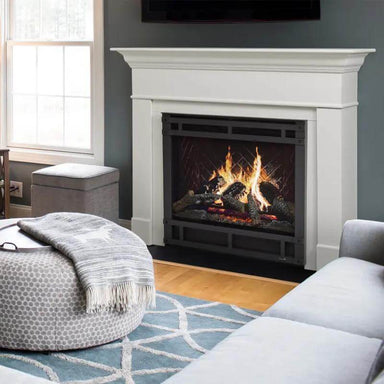
  • A 240V hardwired electric fireplace can produce up to 2,700 watts and approximately 10,000 BTUs, compared to around 1,500 watts and 4,600 BTUs for a standard 120V unit. This nearly doubles the heating area — up to 800 square feet versus roughly 400 square feet for a 120V model. So if you're heating a large open-concept room or great room, a 240V unit is a significant upgrade.

  • Yes — a 240V hardwired electric fireplace must be connected directly to your home's electrical system by a licensed electrician, since it cannot simply be plugged into a standard wall outlet. The electrician will wire the unit to a dedicated circuit breaker in your electrical panel. Some local jurisdictions may also require a permit and inspection for this type of installation.

  • Yes, a dedicated circuit is strongly recommended — and often required — for a 240V hardwired electric fireplace. A dedicated circuit means the line runs directly from your electrical panel to the fireplace only, with no other outlets or devices sharing it. Sharing a circuit with other appliances can cause voltage fluctuations, tripped breakers, or even electrical safety hazards.

  • Some models are dual-voltage and can operate on both 120V and 240V — for example, the Dimplex Revillusion series supports both options. However, the heat output differs significantly: running at 240V produces around 8,500–9,000 BTUs, while the same unit at 120V produces roughly 4,600 BTUs. Always check the specific product's specifications to confirm whether dual-voltage operation is supported.

  • Yes, 240V hardwire electric fireplaces are safe when properly installed on a dedicated circuit by a licensed electrician. They produce no smoke, fumes, ash, or harmful emissions, and require no venting, chimney, or gas lines whatsoever. The flame effect is entirely simulated using LEDs, so there is no open flame or combustion risk, making them a clean and low-maintenance heating option.